
Washington wants Gulf money to help deliver America First. The Gulf has every reason to ask what comes back the other way. American businesses that understand that question still have an opportunity here.
Washington has become very good at counting Gulf money before it arrives. It is rather less convincing at explaining why the Gulf should keep putting American priorities ahead of its own.
Following President Trump’s May 2025 Gulf tour, the White House celebrated a package of trade and investment commitments. Tim Callen at the Arab Gulf States Institute records the combined headline for Saudi Arabia, Qatar and the United Arab Emirates as $3.4 trillion. That’s a hell of a number. It’s also a collection of commitments, with different purposes and timescales, rather than a pot of money available to spend.[1][2]
Put simply, a pledge is a press release – hell, even a cheque in the post is only a gesture – it’s only when the cash is cleared in the bank that we can start to get serious!
Yet headline diplomacy encourages precisely the opposite habit. Announce an enormous number, celebrate the relationship and leave the difficult questions about delivery for later. Anyone building a business plan around that needs to put the champagne down.
America First works both ways
The administration is perfectly entitled to pursue American jobs, American industry and American investment. What it cannot reasonably expect is for Gulf governments to treat those objectives as more important than their own people’s security and prosperity.
If America First is a legitimate political position, then Gulf governments putting their own economies first should hardly come as a bloody surprise.
The war with Iran has made that argument harder to ignore. In its September policy brief, the Peterson Institute for International Economics argues that spending on defence, damaged infrastructure and alternative trade routes could displace some of the region’s American commitments. It also points out that those commitments are loosely defined, leaving room to change their timing and composition.[3]
My view is straightforward. A government facing expensive repairs and exposed infrastructure owes its citizens a better explanation for sending capital overseas than ‘we promised a very large number at a presidential visit’.
Keep the figures honest
Callen’s August analysis found that American goods exports to the six Gulf Cooperation Council states fell by 30 per cent in March to May 2026 against the same period a year earlier. It also identified sales of American financial assets of roughly $19 billion by Saudi Arabia and $15 billion by the Emirates after the war began.[2]
Those sales do not establish a wholesale exit. The six states held $1.3 trillion in American securities in June 2025, and valuation gains more than offset the Emirati sales. Callen himself expects the setback to be temporary.[2]
Fair enough. The evidence doesn’t justify announcing the end of the relationship. It does justify asking why anyone still assumes that Gulf capital will turn up simply because Washington wants it, or because a Western business has finally decided the region looks interesting.
The fairweather friendship problem
This is where the money argument becomes political. I see an administration eager to celebrate Gulf commitments to American prosperity, while the region has growing reasons to question the reliability of the security relationship underpinning them. The Peterson Institute explicitly identifies weakened confidence in the American security umbrella.[3]
That looks an awful lot like fairweather friendship to me. The Gulf is a valued partner when its money is wanted. When its own priorities become inconvenient, it discovers just how conditional the relationship can be.
There is a commercial consequence. An American company arriving with a pitch built entirely around what it wants to take out of the region should expect harder questions about what it intends to put in. I should know – I worked for one and was asked these questions all the time.
The Gulf wants the best on its own terms
The region still wants the best technology and expertise the West has to offer. Increasingly, the commercial opportunity is to turn that capability into a local proposition: appropriate data residency and sovereignty arrangements, Arabic that works properly, and Shariah compliance where the product requires it. Expecting the customer to accept your overseas model unchanged is a good way to lose the business.
Look at buy now, pay later (BNPL). The appeal is familiar from established Western services: take the purchase home and spread the payments. Regional providers such as Tabby and Tamara offer that convenience within structures they describe as Shariah compliant. Tabby publishes independent scholarly certification; Tamara publishes its Shariah committee and product approvals.[4][5]
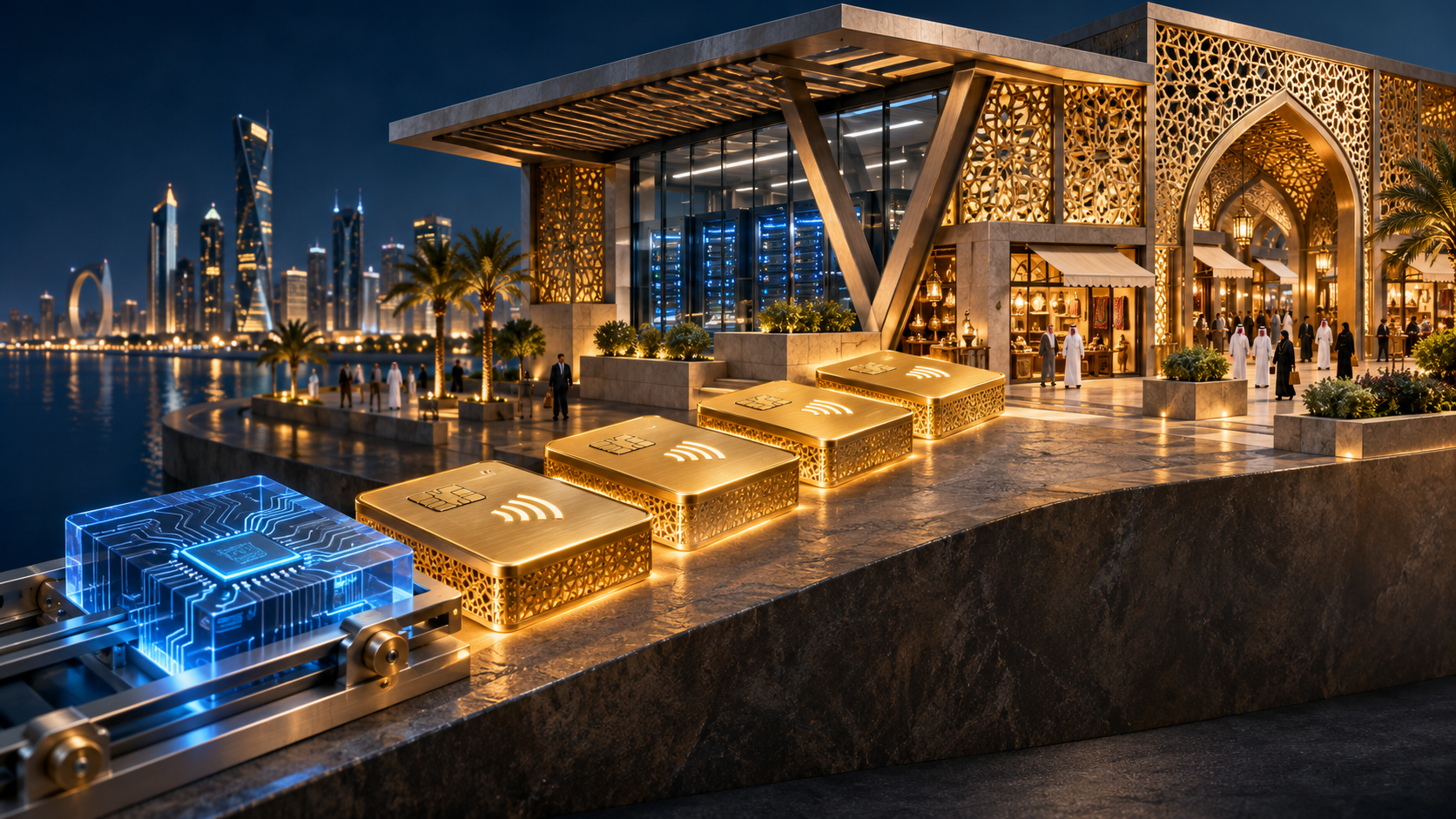
The commercial opportunity lies in making proven ideas work for local markets.
That is commercial adaptation with substance. Contracts and governance matter as much as the customer interface. The product has to work for the people buying it, rather than asking them to accommodate the supplier’s preferences.
Entrepreneurship is not the same as invention
We should be honest about what this demonstrates. Building a successful local business around an established idea is entrepreneurship. It does not mean the underlying idea originated there. Adapting the product may involve new engineering and inventive commercial structures, but originating a model and making it work in another market are different achievements.
That distinction creates a substantial opportunity for Western businesses with proven products and intellectual property. A regional partner can contribute market knowledge, customer access and local execution. The Western firm can contribute technology and product expertise. Licensing, joint ventures and regional product development can give both a commercial stake in making the local version succeed.
The American firms we want to find
At Howarth International, our ambition is to find American firms that disagree with the Trump administration’s approach and still want to do great business in the Gulf. Firms whose own ambition stretches beyond securing a contract or finding somebody to fund their expansion back home.
The distinction matters. A company’s nationality tells you where it comes from. Its decisions tell you what kind of partner it will be. We want to hear from businesses prepared to invest in local delivery, develop people in the region (meeting Emiratisation and Saudisation goals are real requirements that are harder to achieve than most people realise) and give their Gulf partners a meaningful share of the value they help create.
Private disagreement with Washington is a starting point. It becomes useful when it changes a board’s decisions. Will it fund a credible local operation? Will it adapt the product and its support to the market? Will it make commitments it can honour when the political mood changes?
After more than twenty years working across the region, I care far more about those answers than another presentation describing the Gulf as a strategic priority. A local address on an invoice answers very little – but it is a good start.
For firms seeking investment, it also means asking against defined milestones and showing what the capital will build in the region. If the entire proposition is that Gulf money will make your business more valuable somewhere else, expect the investor to ask why that is their problem.
Earn the relationship
There is still good business to do here. At Howarth, we want to hear from American firms prepared to adapt and invest, and from Gulf organisations looking for the right Western capability to develop for their own markets.
Our job is to bring those ambitions together and help make the resulting offer deliverable. Both sides should finish with something more valuable than a signed announcement.
And if Washington insists on America First, it can hardly complain when the Gulf stops putting itself second.
Next in the series: America Is a Fairweather Friend to the Gulf. What happens when the region stops treating American protection as something it can take for granted?
Sources
[1] The White House, 15 May 2025, fact sheet on US UAE deals and the previously committed investment framework.
[2] Tim Callen, Arab Gulf States Institute, 3 August 2026, The Trump Presidency, Iran War, and US Gulf Economic Relationship.
[3] Gregory Auclair and Adnan Mazarei, Peterson Institute for International Economics, September 2026, Policy Brief 26 15.
[4] Tabby Saudi Arabia, published Shariah commitments and certification information.
[5] Tamara Saudi Arabia, published Shariah committee responsibilities and product approvals.