Sport, Risk and Resilience
What the Gulf’s disrupted 2026 sporting calendar tells us about investing through instability and what Bahrain’s relocation of its Grand Prix to Malaysia reveals about the difference between losing a venue and losing a market.
The 2026 Formula 1 season is the most disrupted the sport has run in the Gulf. Two race weekends were cancelled outright. One was relocated more than eight thousand kilometres to Malaysia while keeping its name, its funding, and its place on the calendar. Two more remain unresolved, with no decision expected before the middle of September. For anyone weighing Gulf-linked sponsorship, tourism, or event investment, this is not background noise – it is the clearest live case study available this year of how the region actually behaves under sustained pressure.
The disruption, stated plainly
Four rounds have been directly affected by the conflict so far, across three Gulf states. The Bahrain Grand Prix, scheduled for 10 to 12 April at the Sakhir circuit, and the Saudi Arabian Grand Prix, scheduled for 17 to 19 April at Jeddah, were both cancelled outright as conflict involving Iran escalated across the region. Bahrain’s round was subsequently rescheduled to the Sepang International Circuit in Malaysia, on 2 to 4 October; no replacement venue was announced for the Saudi Arabian round, which simply came off the calendar.
Qatar and the United Arab Emirates remain a live question rather than a settled one. Formula 1 president Stefano Domenicali confirmed in late July that the Qatar Grand Prix, due at the Lusail International Circuit near Doha on 29 November, and the Abu Dhabi Grand Prix, due at the Yas Marina Circuit on 6 December, are still on the calendar as scheduled, with no decision on relocating or cancelling them expected before mid-September. Both races are already sold out – Domenicali cited this directly as evidence that, in his words, the sport is bigger than the problem the world is living through.
Contingency planning has a specific shape: should the two rounds need to be relocated, Imola has emerged as the leading candidate to host a European season finale, with Portimão ruled out due to ongoing construction work at the circuit. Some other reports have described Qatar and Abu Dhabi as already cancelled in favour of Las Vegas as the season finale; that account conflicts with the more recent statements from F1’s own leadership, and the two rounds are best treated as unresolved rather than settled either way.
Set against a planned twenty-four race calendar in 2025, the practical effect is that Bahrain has changed address, Saudi Arabia has lost its round entirely for the year, and Qatar and the UAE are each carrying a live question mark into the closing months of the season.
Sources: Euronews, 29 July 2026; Sky Sports, July 2026; Speedweek.com, July 2026; The National, 29 July 2026; PlanetF1, July 2026 (Imola and Portimão contingency reporting).
What it cost: the numbers behind the disruption

Liberty Media’s own second-quarter 2026 results put a precise figure on this disruption.
Formula 1 revenue for the quarter came in at $764 million, down 38 per cent from $1.226 billion in the same quarter of 2025, with only five races held in the quarter against nine a year earlier. Across the first half of the year, revenue fell 15 per cent, from $1.629 billion to $1.381 billion, on eight completed races rather than eleven. Operating income fell far more sharply than revenue, from $293 million to $73 million, and adjusted operating income before depreciation and amortisation dropped from $361 million to $139 million.
Team payments, excluding Concorde incentive payments, fell 20 per cent, from $627 million in the first half of 2025 to $500 million this year. Liberty Media attributed the decline directly to four fewer races held in the quarter and three fewer year-to-date, which reduced the proportion of season-based revenue it could recognise – 5/22nds of the season during the quarter, against 9/24ths in the same period a year earlier, and 8/22nds year-to-date against 11/24ths previously. The Bahrain and Saudi Arabian Grands Prix were the direct cause of that shortfall. A separate change, the removal of Imola from the calendar, was unrelated to the conflict and should not be read as part of the same disruption.
Two things temper the headline numbers. Liberty Media has been clear that the shortfall is a timing effect rather than a demand problem: attendance, audiences and digital engagement were reported up season-to-date, viewership rose year-on-year through the sport’s Apple partnership with total hours watched up 13 per cent, and the business signed a ten-year extension in Las Vegas during the same period. And the addition of the Malaysia round should allow more of the season’s revenue to be recognised in the fourth quarter, reducing the full-year financial impact of the disruption – even if the first-half numbers remain a genuine loss for the teams who received smaller payments at a point in the season when they needed them most.
Source: Liberty Media second-quarter 2026 financial results, as reported by GrandPrix247, 6 August 2026.
Bahrain’s strategy: relocate the race, keep the asset
This is the part of the story that deserves closer attention, because it is an unusually clean example of a Gulf state protecting a commercial and reputational asset rather than simply absorbing a loss.
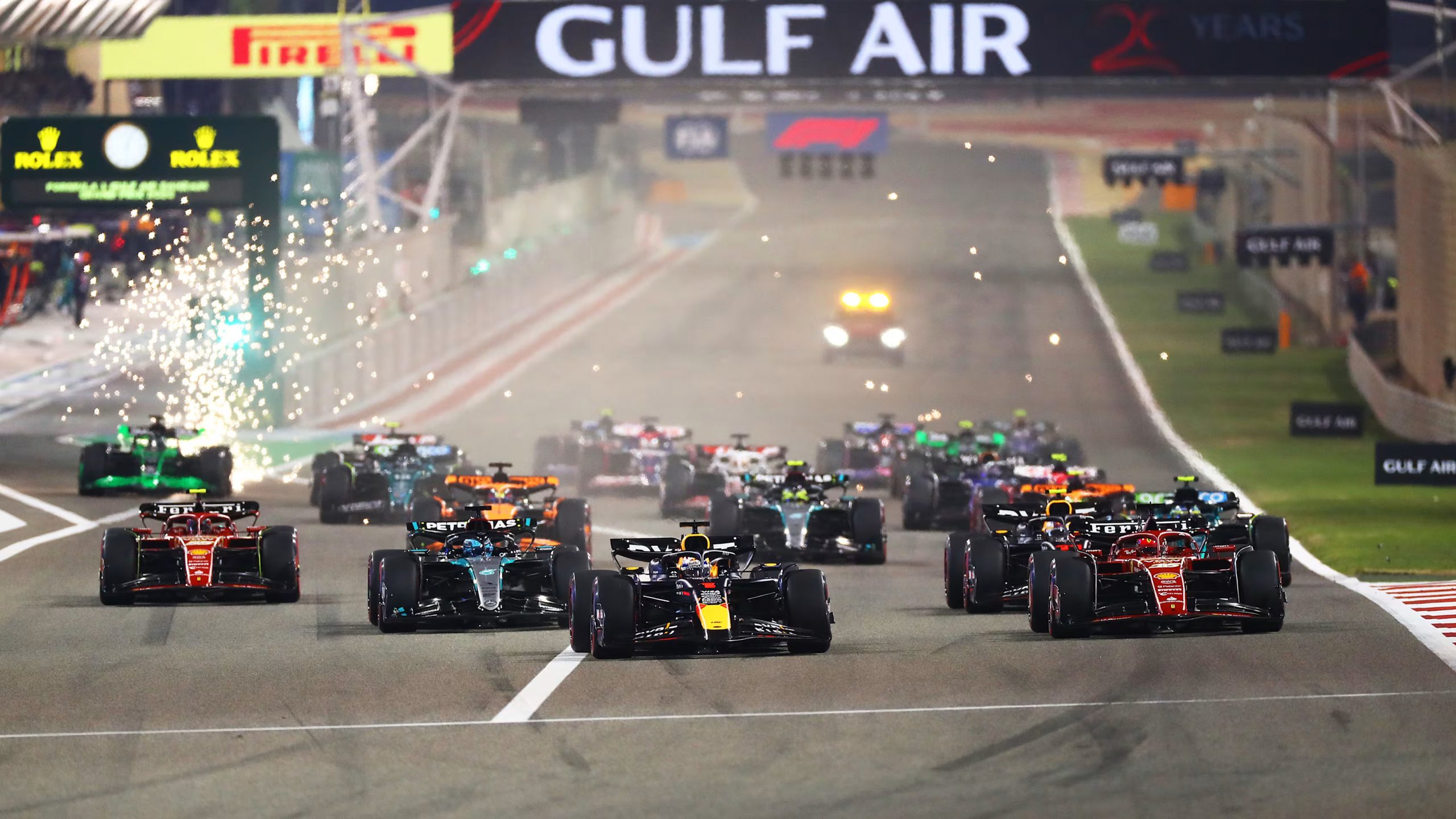
On 26 July 2026, Formula 1 confirmed that the rescheduled Bahrain Grand Prix would be held not in Bahrain but at the Sepang International Circuit near Kuala Lumpur, on 2 to 4 October, under an agreement signed between the governments of Bahrain and Malaysia, the FIA, and Formula 1 itself. Three details matter more than the geography:
- The race keeps the Bahrain name. It is officially titled the “Gulf Air Bahrain Grand Prix in Malaysia” – Bahrain’s national carrier remains the title sponsor, and the event is branded as Bahrain’s race being hosted elsewhere, not as a new Malaysian round.
- Bahrain is funding the race itself. Reporting describes the Gulf state as bearing the cost of staging the event in Malaysia, effectively paying to keep its slot, its brand, and its commercial relationships intact rather than ceding the round entirely.
- It was negotiated at government level. This was not a promoter-to-promoter deal; it required an agreement between two national governments alongside the sport’s own governing bodies, which points to the strategic weight Bahrain placed on preserving the asset.
Set against Saudi Arabia’s straightforward cancellation, the contrast is instructive. Bahrain treated the Grand Prix as a brand and a set of commercial relationships that happened to be hosted at Sakhir, and when Sakhir became unviable, it exported the event while keeping everything else intact. Saudi Arabia’s round, by contrast, simply came off the calendar.
Sources: Al Jazeera (Reuters), 26 July 2026; Sky Sports, 26 July 2026; News.GP, early August 2026.
The contractual and risk-management lens
For anyone evaluating Gulf-linked event, sponsorship, or activation investment, Bahrain’s approach is a useful template for the questions worth asking before committing capital, not just after a disruption occurs.
- Who bears the cost of relocation, and is that allocation agreed in advance rather than negotiated under pressure? Bahrain’s willingness to fund an away race suggests the value of the brand and calendar slot outweighed the direct cost of hosting elsewhere.
- Is the commercial value attached to the venue, the brand, or the relationship? A contract structured around the brand and the audience, rather than a fixed physical location, is inherently more resilient to this kind of disruption.
- What government-to-government machinery exists, or could be built, to enable a fast relocation rather than an outright cancellation? This is closer to sovereign diplomacy than conventional event insurance, and it is often the piece missing from a standard commercial contract.
The pattern itself – brand-first structuring over venue-first structuring – is a genuinely transferable lesson for anyone thinking about a multi-year Gulf sponsorship or activation commitment.
Built through disruption: the case for continued commitment
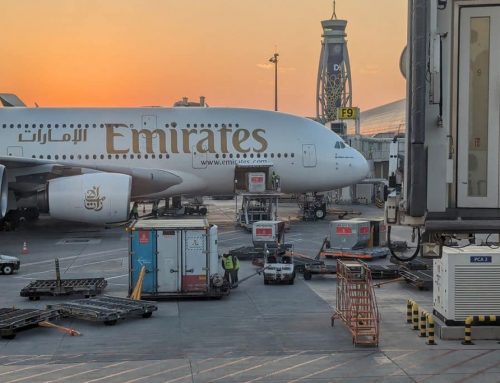
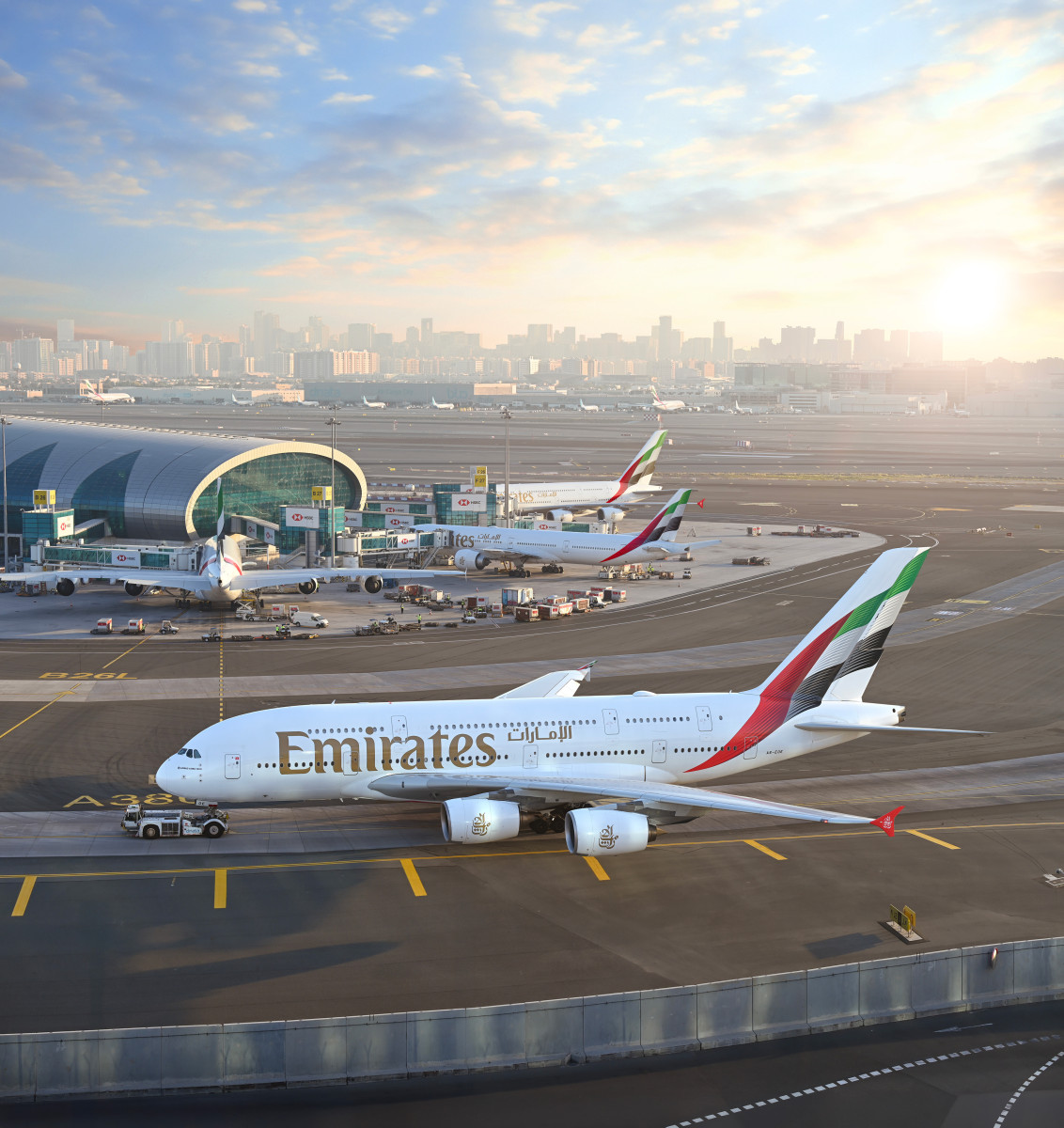
The clearest verifiable example of continued institutional commitment through the disruption comes not from a formal government announcement but from one of the Gulf’s own state-owned carriers. On 17 June 2026, Emirates launched what it describes as the world’s first travel insurance product to include dedicated conflict-related cover as standard: reimbursement for conflict-related medical expenses of up to US$25,000, a free 30-day trip extension, airline-managed hotel accommodation during disruptions including airspace closures, and complimentary rebooking on other airlines when flights are cancelled because of conflict. The cover applies regardless of government travel advice, and it is sold as a mainstream product built into the standard booking flow across 27 markets, including the UK, Canada and South Africa, developed with the insurer Travel Guard, rather than a bespoke corporate solution held back for high-risk clients.
Emirates president Sir Tim Clark said the airline had identified a gap in the market and moved to close it, citing continued strong demand for travel into and through Dubai.
Credit: emirates.com
Let’s be precise about what that actually means.
Emirates Group has been wholly owned by the Investment Corporation of Dubai, the Government of Dubai’s principal investment arm, since an ownership transfer decreed by Sheikh Mohammed bin Rashid Al Maktoum in December 2008 – the airline operates with its own commercial management, and this was announced as a corporate product launch, not a government statement. But the ownership matters: this is not an independent private carrier taking a commercial risk. It is as close to an institutional government position as this piece can point to without an actual communique, and a considerably more concrete one than the unconfirmed alliance claim it replaced. A wholly state-owned entity choosing to underwrite conflict risk as a routine, price-able part of its offering is a genuine institutional bet on continued travel demand through the region, made with the balance sheet of an asset that ultimately sits on the Government of Dubai’s own books.
This is not a one-off. Around the same time, Etihad Airways introduced its own conflict-related medical cover, built directly into ticket pricing for eligible international arrivals rather than sold as an optional add-on. Etihad is wholly owned by ADQ, Abu Dhabi’s sovereign wealth fund, since a 2022 ownership transfer – a separate emirate, a separate sovereign vehicle, reaching the same conclusion independently. Both sit within the same federal UAE government, so this is not two sovereign states acting in parallel; it is two separate emirate-level governments, each with its own sovereign wealth vehicle and its own airline, independently reaching the same commercial judgement within weeks of each other. That is still a considerably stronger signal than either decision taken alone.
Sources: Emirates media centre, “Emirates launches world’s most comprehensive travel insurance”, 17 June 2026 (emirates.com); Bloomberg, 17 June 2026; Insurance Asia, June 2026; AGBI and Investment Corporation of Dubai (icd.gov.ae) on Emirates Group’s ownership structure; ADQ (adq.ae) and ch-aviation on Etihad Aviation Group’s ownership structure.
The investor-confidence counterpoint
The clearest data point in favour of continuity comes from investor sentiment itself. A survey conducted by the strategy and communications firm Consulum in partnership with the polling firm HarrisX, carried out online between 12 and 16 June 2026 among active investors in the United States, United Kingdom, Germany, France and China, found that 82 per cent of respondents were confident in the Gulf region’s future economic outlook. Confidence was highest among Chinese investors at 91 per cent, followed by the United States and United Kingdom at 84 per cent each, Germany at 80 per cent, and France at 71 per cent. Sixty-nine per cent rated the region as a good or great place to invest or do business right now, and seventy per cent expected the GCC’s importance in the global economy to increase over the next five years. A companion survey of nationals and residents across Bahrain, Saudi Arabia, the UAE and Qatar, conducted in May 2026, found ninety per cent saying their country was on the right track and eighty-nine per cent expressing confidence in their own economic future. The findings were reported independently by Khaleej Times, Zawya and Hellenic Shipping News, all citing the same firms and methodology.
Read together with the sport-specific evidence above, the question this raises is the right one: does a cancelled race weekend actually change the underlying investment thesis for the Gulf, or does it simply change a calendar entry while the thesis itself holds? The investor-confidence data suggests the latter – though sport is only one input into that broader picture, and none of this should be read as a claim that event cancellations are costless.
Sources: Khaleej Times, 5 July 2026; Zawya (Al Hilal Publishing/SyndiGate), 6 July 2026; Hellenic Shipping News, 7 July 2026 – all citing Consulum and HarrisX.
The long-horizon portfolio view
Widen the lens beyond motorsport and the disruption looks smaller still. Saudi Arabia’s Public Investment Fund has built a sports portfolio spanning golf, boxing and football; Qatar continues to leverage the stadium and venue infrastructure built for the 2022 World Cup; the UAE runs one of the densest sport and events calendars in the world across Abu Dhabi and Dubai. These are multi-year, capital-intensive commitments built on a decade-plus horizon, not single-season sponsorship arrangements – and set against that scale, one lost race weekend, however visible, is a small variance against capital already deployed.
A different kind of disruption: Saudi Arabia’s World Cup calendar problem
The largest single commitment in that portfolio – the 2034 FIFA World Cup, confirmed for Saudi Arabia by FIFA vote in December 2024 after Australia withdrew as a rival bidder – is itself facing a disruption of its own, and it is worth pausing on because it is a genuinely different species of problem to everything discussed above. This one has nothing to do with conflict.
Reports since surfaced by Politico, and since followed by outlets including Yahoo Sports, Arabian Business and Construction Week Online, suggest FIFA may need to move the tournament from its assumed November to December 2034 window into January or February 2035. The reason is calendar mathematics rather than geopolitics: Ramadan is projected to run from roughly 12 November to 12 December 2034, directly across the winter slot Qatar used successfully in 2022, while the Hajj pilgrimage, which draws around two million people to the Kingdom, falls in early March 2034, and the Winter Olympics in Salt Lake City competes for global broadcast and sponsorship attention earlier in the same year. Saudi Arabia is also due to host the AFC Asian Cup in 2027 and the Asian Games in 2034, adding further sequencing pressure across a decade of stacked commitments. None of this has been confirmed by FIFA, and it should be read as an open scheduling question rather than a settled outcome, in the same way the Qatar and Abu Dhabi Grand Prix status was treated earlier in this piece.
The reason this belongs alongside the Formula 1 story, rather than as a footnote to it, is the contrast it offers. A conflict-driven cancellation, like Bahrain’s or Saudi Arabia’s Grands Prix this year, says something about regional stability in the moment. A religious-calendar collision on a tournament confirmed a decade in advance says something else entirely: that hosting multiple mega-events in the same country within a short span is a genuinely difficult planning exercise, independent of politics.
Stadium construction across Riyadh, Jeddah and Dammam has continued regardless, and the hosting commitment itself has never been in question – only the exact dates have.
For anyone advising on Gulf-linked event or infrastructure timelines, the two stories together make the same point from opposite directions: not every headline disruption carries the same meaning, and telling a geopolitical shock apart from an ordinary, if unusually public, scheduling clash is itself part of reading the risk correctly.
Sources: Politico (as reported by Caliber.Az, July 2026); Yahoo Sports, Arabian Business and Construction Week Online, July 2026; FIFA hosting confirmation, December 2024 (BBC, Reuters).
A quieter question: is Dubai’s Autodrome doing enough work or is there more to come?
One asset in this picture sits inside the region’s own borders rather than in the disruption itself, and it is worth a moment’s attention.
Dubai Autodrome, which opened in October 2004, is often described in passing as an FIA Grade 1 circuit, but the more precise position, confirmed by Apex Circuit Design, the firm that built it, is that it holds FIA Grade 1T certification – the testing-specific classification, not the full Grade 1 licence needed to host a championship round.
In practice, its calendar today is built around endurance and GT racing, headlined by the Dubai 24 Hour and the Asian Le Mans Series, alongside a regional Porsche one-make series and a junior single-seater programme. That is a genuinely strong domestic and GT racing calendar, and none of what follows is a criticism of it.
Moving from a testing certification to a full race-hosting one is a specific, known gap rather than a broad one: the circuit’s hospitality, spectator and paddock facilities have not yet been built out to the standard the FIA requires for a championship round, on top of the FIA’s own re-inspection and approval process – the same infrastructure Yas Marina was purpose-built with from the outset when it was constructed specifically to host the Abu Dhabi Grand Prix.
Ninety minutes down the coast, Yas Marina carries the UAE’s elite single-seater profile as a result; Dubai’s own circuit remains one hospitality build-out short of the same status. In a year when the region’s tourism authorities are visibly working to rebuild visitor confidence after a disrupted conflict period, and when Bahrain has just shown how far a Gulf state will go to keep an elite motorsport asset on the calendar even at the cost of hosting it abroad, an unfinished hospitality upgrade standing between Dubai and a Formula 1-capable second circuit, in one of the world’s most visited cities, looks, in the eyes of many, like unfinished business rather than a settled position.
Sources: Apex Circuit Design (dubai-autodrome project page); Wikipedia, “Dubai Autodrome” (event history); Dubai Autodrome official site (dubaiautodrome.ae); YallaMotor and Dubicars 2026 event calendars.
Where this leaves a client asking what to do now
The practical question is rarely “is the Gulf still investable” in the abstract. It is closer to: “should we proceed with a specific launch, sponsorship, or activation on the timeline we had planned, or wait for more clarity?”
The evidence assembled here points toward structuring for resilience rather than waiting for certainty.
Bahrain’s Malaysia relocation is itself the clearest illustration of that distinction available this year: the venue moved, but the brand, the funding commitment, and the calendar slot did not.
Anyone weighing a Gulf-linked commitment in the second half of 2026 would do well to ask their own version of Bahrain’s question – is what we are protecting the venue, or the relationship – before the market answers it for them.
If any of this touches on a decision you are weighing – GCC market entry, company representation, sports related or not, or simply how to read the region’s direction from here – Howarth International is glad to talk it through. Get in touch to arrange a conversation.