There is a noticeable shift taking place across the Gulf.
After a period of disruption and uncertainty, the region is signalling that it wants to get back to what it does particularly well: attracting capital, entrepreneurs, investors and international talent, and increasingly, it is prepared to put meaningful incentives behind that ambition.
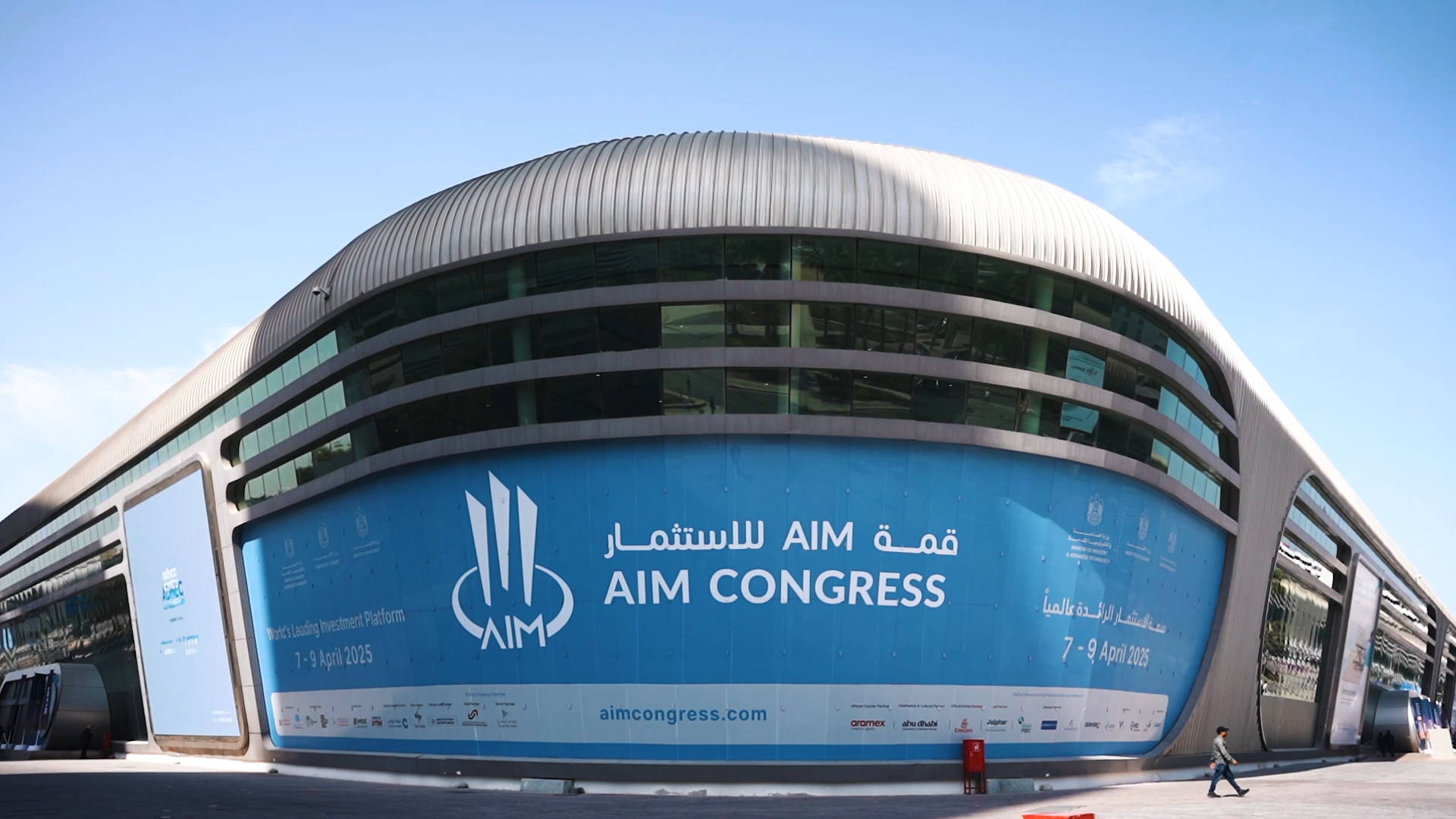
The recent AIM Congress in Dubai provided a useful snapshot of the appetite that remains.
Held at the Dubai World Trade Centre from 7–9 September, AIM 2026 brought together investors, policymakers, entrepreneurs and business leaders from around the world. More than 15,800 participants from 181 countries attended, underlining that international interest in the region has not disappeared.
That matters.
The Gulf’s proposition has never been simply about low taxation or sunshine. The bigger proposition is increasingly about access to capital, infrastructure, rapidly developing markets, government-backed investment programmes and the ability to build businesses at considerable speed.
And governments across the region appear increasingly conscious that founders and internationally mobile businesses have choices.
The competition for founders is becoming more sophisticated
The next phase of Gulf economic development is not simply about persuading companies to establish a legal entity in the region.
It is about persuading entrepreneurs to relocate themselves, their teams and, importantly, their intellectual property and future investment activity.
That requires a broader proposition.
Company formation packages, free-zone incentives, long-term residency, subsidised programmes, access to government-backed funding, accelerator programmes and introductions to investors are increasingly becoming part of the package.
Qatar provides a good example of the direction of travel. In February, the Qatar Investment Authority announced an additional $2 billion for its Fund of Funds, taking the programme to $3 billion, specifically to attract venture capital firms and strengthen the country’s entrepreneurial ecosystem. Qatar also announced plans for a 10-year residency programme for entrepreneurs and senior executives.
This is significant because residency is becoming an economic development tool.
For an entrepreneur, the decision about where to live and where to build a company are increasingly connected. A jurisdiction that can provide stability, access to markets, capital and a long-term residency pathway has a considerably stronger proposition than one offering a company registration alone.
From “tax haven” to growth platform
The Gulf’s proposition is also changing.
The old narrative was largely centred on tax efficiency. That remains relevant, but it is no longer sufficient.
Founders are looking for customers, capital, talent, infrastructure and scale.
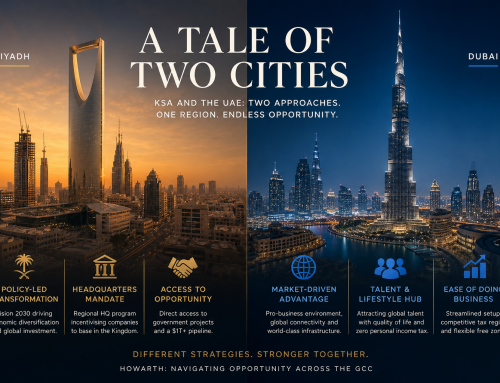
The UAE has spent years developing an ecosystem around precisely these requirements, while Saudi Arabia is leveraging the sheer scale of its domestic market and the investment associated with Vision 2030. Qatar is building out its technology and investment ecosystem, while Bahrain and Oman continue to position themselves around specific sectors and lower-cost entry points.
The competition is therefore becoming more nuanced.
The question for an entrepreneur is no longer simply:
“Where can I pay the least tax?”
It is:
“Where can I build the most valuable company?”
That is a much more interesting question.
Incentives are becoming part of the relocation equation
For founders considering a return to the Gulf, the economics can extend well beyond corporate taxation.
Depending on the jurisdiction and programme, the package can involve:
- Business setup and licensing incentives
- Free-zone or economic-zone benefits
- Long-term residency options
- Startup and accelerator programmes
- Access to government-backed investment
- Venture capital and co-investment programmes
- Reduced administrative barriers
- Access to large institutional and government customers
- Support with relocation and market entry
- Increasingly sophisticated technology and innovation infrastructure
Qatar’s current startup initiatives, for example, include programmes offering funding and relocation or licensing support to qualifying companies.
The important point is that these incentives should not be viewed individually.
For a founder, the combined value of residency, business setup, access to capital, market access and operating environment can materially change the economics of relocating a business.
The resilience is perhaps the most interesting part
There is another message coming out of Dubai that should not be overlooked.
The appetite is still there.
Despite the considerable geopolitical and economic challenges the region has faced, investors, entrepreneurs and policymakers continue to turn up.
That resilience is important.
The Gulf states have spent more than a decade trying to diversify their economies away from an overwhelming dependence on hydrocarbons. Technology, financial services, logistics, tourism, advanced manufacturing, artificial intelligence, healthcare and professional services are now central to that diversification agenda.
That means attracting entrepreneurs is not a peripheral policy objective.
It is increasingly central to the economic model.
And that creates an interesting opportunity for people who previously lived and worked in the region but subsequently moved elsewhere.
Is the Gulf ready for a second wave?
Perhaps the more interesting question is whether we are approaching a second wave of Gulf entrepreneurship.
The first wave was driven heavily by the region’s rapid economic expansion and the opportunities created by large infrastructure and real-estate programmes.
The next wave could be different.
It could be driven by entrepreneurs bringing internationally developed businesses into the region, using the Gulf as a platform for expansion into the Middle East, Africa and Asia.
That makes the proposition relevant not just to someone starting a company from scratch, but to an established founder looking for the next stage of growth.
For those people, the Gulf can offer something that is increasingly difficult to replicate elsewhere: significant pools of capital, ambitious government investment programmes, rapidly developing infrastructure and governments actively looking to attract international business.
The message from Dubai
AIM Congress was, in many respects, a useful barometer.
The rooms were full. The investors were present. The entrepreneurs were present. And the appetite to do business remains substantial.
The Gulf is not pretending that the last few years did not happen. Nor should anyone considering a return.
But the region’s response is increasingly one of resilience rather than retreat.
Governments are adjusting incentives, expanding investment programmes and competing for the founders and talent that can help deliver the next phase of economic diversification.
For entrepreneurs who left the region, or who have been considering it from afar, this may be a good time to look again.
Not because the Gulf is offering a return to the past.
But because it is attempting to build what comes next.
At Howarth International, we believe the question for internationally mobile entrepreneurs is therefore becoming less about whether the Gulf remains relevant, and more about which Gulf market, incentive structure and business model makes sense for the next stage of growth.