
Good – solid material on both threads. Here’s the reworked March post, keeping them clearly separate.
Two Very Different Races Are Now Running Simultaneously In The Gulf
In the space of a single week at the end of February, the Gulf moved from being the world’s most compelling emerging business story to the world’s most urgent geopolitical one.
On 28 February, the US-Israeli coalition struck Iran. Tehran’s retaliatory missile and drone campaign began within hours. The UAE – which hosts US military installations and has spent decades cultivating its image as the region’s stable, open-for-business hub – found itself directly in the line of fire.
We are not going to write around that. It is serious. The human cost is real. The economic disruption is significant and growing. And for the people living and working across the region, the uncertainty is profound in a way that no business analysis fully captures.
But there is a second story running beneath the conflict – one that began long before February 28 and will continue long after it ends. And it matters enormously for any business thinking about where the Gulf is headed.
The AI race that was already underway
Before the first missile was fired, the GCC was engaged in a different kind of competition — one fought with sovereign wealth funds, data centres, and technology partnerships rather than weapons.
Public announcements point to more than $30 billion being invested in GCC countries to establish AI data-centre capacity between now and 2030 – an average of over $6 billion per year.
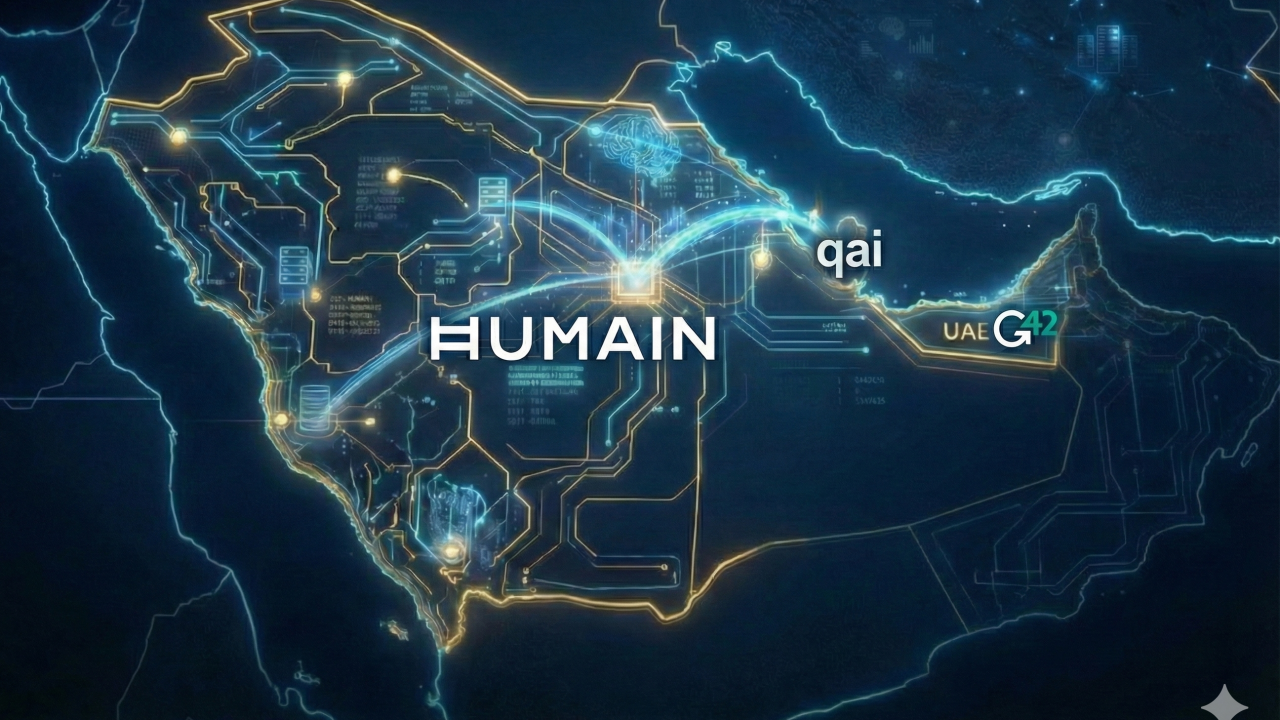
The UAE moved first and moved fast. The Stargate UAE initiative – bringing together G42, OpenAI, Oracle, NVIDIA, Cisco and SoftBank – aims to deploy 1 gigawatt of AI data-centre capacity in Abu Dhabi, backed by $8–10 billion in investment, with 200 megawatts expected operational by 2026–2027. Separately, Microsoft announced a $7.9 billion expansion of AI and cloud infrastructure in the UAE through Khazna Data Centers, to be delivered across 2026–2029.
Saudi Arabia responded at scale. The Kingdom’s HUMAIN initiative – backed by the Public Investment Fund and partnered with NVIDIA, AMD, AWS, Qualcomm and Cisco – targets 1.9 gigawatts of data-centre capacity by 2030, with longer-term ambitions of reaching 6 gigawatts by 2034.
Qatar, Kuwait and Bahrain are not standing still either. In Qatar, Ooredoo’s data-centre subsidiary Syntys launched sovereign AI cloud services backed by a $1 billion investment. In Kuwait, Google Cloud and Microsoft Azure both unveiled plans to establish cloud regions.
The UAE and Saudi Arabia are often characterised as friendly rivals in this space – the UAE with its early start and international collaborations, Saudi Arabia with its sheer scale of investment. Qatar and Bahrain are carving out distinct niches: Qatar in data-centric development and global standards alignment, Bahrain in regulatory innovation and ethical AI.
This is not technology investment for its own sake. By making themselves essential to the global AI build-out, the Gulf states are simultaneously pursuing economic diversification and deepening their strategic relationships with Washington – ensuring that their long-term security interests are woven into the fabric of the world’s most consequential technology race. It is, in its own way, a masterclass in long-term positioning.
AI is projected to contribute up to $320 billion to the Middle East economy by 2030, with the UAE expected to see the largest relative GDP impact — estimated at 14% — and Saudi Arabia the largest absolute contribution at $135 billion.
How these two stories intersect
It would be wrong – and frankly disrespectful to those experiencing the conflict – to frame the military situation as merely a backdrop to a technology boom. They are not equivalent stories.
But they are connected in one important respect: the Gulf’s AI investment programme is not a peacetime luxury that gets shelved when things get difficult. It is the structural bet these nations are making on their own futures – and that bet does not pause for a conflict.
The UAE’s non-oil PMI hit a 12-month high of 55 in February, just as the conflict was beginning, with officials consistently emphasising that business activity across the country was continuing. The infrastructure investment pipeline – data centres, logistics, financial services, clean energy – remained intact. The sovereign wealth funds kept deploying capital.
The countries of the GCC are building for 2030 and beyond. They are doing so in the middle of a regional crisis. That combination – strategic ambition maintained under pressure – is itself a signal worth reading carefully.
What this means for businesses operating here
The regulatory environment simultaneously tightened and clarified at the start of 2026. New Federal Tax Authority enforcement powers, a mandatory five-year window for VAT claims, and an approaching e-invoicing requirement together signal a maturing market that expects serious, compliant operators.
The structure of your entry – free zone versus mainland, licensing, staffing – matters more than ever. The compliance bar is higher. The opportunity, for those who get it right, is larger than at any point in the region’s history.
And now there is a third consideration: resilience planning. The consensus among serious advisers is not whether to maintain regional presence but how to formalise it – secondary operating locations, replicated treasury infrastructure, enhanced business continuity. As one senior regional adviser put it: these are the hallmarks of mature financial hubs, not signs of retreat.
Our view
The Gulf is running two races at once. One, nobody chose. The other, these nations have been preparing for years.
At Howarth International, we are watching both closely – and operating through both. If you are navigating decisions about your regional presence, market entry, or business structure in the current environment, we are here and we are active.