
Let’s be direct about where we are.
The Middle East is in the middle of its most serious regional conflict since the Gulf War. The human cost is real and rising. Infrastructure is damaged. Airspace is disrupted. Supply chains are fractured. Families are displaced.
We are not going to minimise any of that.
But we are going to make the case – clearly, and based on two decades of presence in this region – that the companies maintaining their commitments right now are making the right call. And that those retreating will regret it.
The countries bearing the heaviest weight
The UAE is absorbing more direct military pressure than any other Gulf state. Stock markets in Dubai and Abu Dhabi have lost around $120 billion in combined value since the conflict began on 28 February, with the Dubai and Abu Dhabi benchmark indices falling 16% and 9% respectively. The Strait of Hormuz remains effectively closed to most commercial shipping, with Brent crude trading at approximately $110 per barrel. Tens of thousands of flights have been cancelled. Major banks instructed staff to work from home.
But if the UAE is bearing the commercial weight of this conflict, Lebanon is bearing something altogether heavier – and has been for far longer.
Lebanon entered 2026 having already suffered a cumulative GDP decline approaching 40% since 2019 – through financial collapse, the Beirut port explosion, political paralysis and hyperinflation. By early 2026, Beirut hotel occupancy had fallen below 25%, tourist arrivals in Q1 were down an estimated 55–65% versus pre-conflict levels, and several major investment projects were frozen outright.
Lebanon’s private sector PMI fell sharply to 47.4 in March – a 17-month low – as supply chains seized up, delivery times stretched to their worst in three years, and business confidence collapsed. The IIF now projects Lebanon’s GDP could contract by up to 16% this year, with the current-account deficit widening to approximately 17% of GDP.
This is a country that was beginning – tentatively, painfully – to find its footing again. The World Bank had noted cautious signs of recovery in early 2026. Then the conflict arrived, and those green shoots were buried.
Lebanon’s Economy Minister has been frank: the damage is significant, the full impact is still unclear, and the immediate priority is managing the humanitarian emergency — relocating displaced people, securing food, fuel and healthcare. But he has also been clear on something else: long-term recovery remains possible, supported by a highly educated workforce and a globally connected diaspora that has never stopped investing emotionally – and financially – in its home country.
That is not spin. That is Lebanon’s history. It has rebuilt before – from worse. It will do so again.
What the numbers say about the UAE
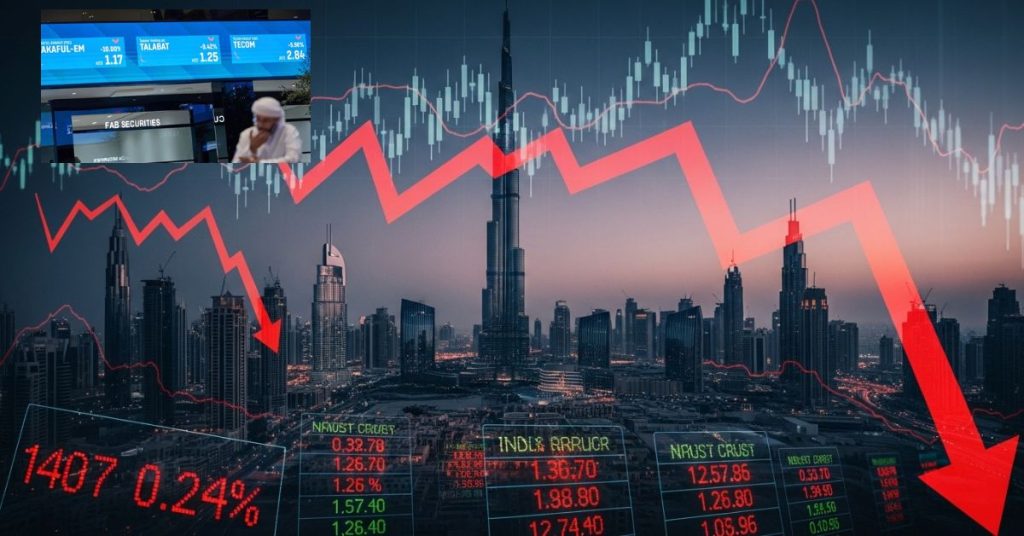
Crises compress sentiment and distort the picture. The structural reality of the UAE hasn’t changed.
S&P affirmed the UAE’s AA/A-1+ sovereign credit rating with a stable outlook. The country’s consolidated net asset position is estimated at 184% of GDP, with government liquid assets at approximately 210% of GDP – buffers S&P describes as providing exceptional capacity to absorb external shocks.
The UAE Central Bank has rolled out a resilience package to free up additional liquidity for lenders, and senior banking executives have been clear that there has been no real impact to date on UAE financial institutions.
One finance professor at the American University in Dubai characterised the stock market decline as a “temporary shock” rather than structural damage – noting that international financial centres are judged by the quality of their regulation, liquidity and institutional resilience, not just market performance during crises.
This region has a long memory
This is the point that most outside observers miss.
The Gulf does not forget who was here when things were difficult. Neither does Beirut. The companies, partners and individuals who maintained their commitments during this conflict – who kept showing up, kept communicating, kept building – will carry a form of relationship capital that cannot be purchased when the airspace reopens and the growth resumes.
That’s not sentiment. That’s how these markets work. Trust is built in adversity, not in stability. Loyalty demonstrated under pressure is remembered for decades. Those who left will find the warmth considerably cooler on their return.
The question isn’t whether to stay – it’s how
The consensus among serious regional advisers is not whether to maintain presence, but how to formalise resilience – secondary operating locations, replicated treasury infrastructure, enhanced business continuity planning. As one senior adviser put it: these are hallmarks of mature financial hubs, not signs of retreat.
The businesses that will own the next decade of growth across this region are the ones treating this period as a test of commitment – and passing it.
Our position
Howarth International has been operating across this region through cycles of disruption and expansion for over a decade. We have never once considered it a market to retreat from. Our conviction now is the same as it was before the conflict began – if anything, deepened by watching who stays and who goes.
The Middle East is not a fair-weather opportunity. It never was. The returns it offers have always reflected the commitment it requires.
The people of this region – in the UAE, in Lebanon, across the Gulf – deserve partners who show up when it’s hard, not just when it’s easy.
Now is when that counts most.
If you’re navigating decisions about your regional presence in the current environment, we’re here and we’re active. Reach out.