
There’s a question we hear regularly from companies evaluating a UAE entry: “Should we wait and see how things develop?”
It’s the wrong question. The better question is: “What position will we be in when the moment comes, if we haven’t built the foundations yet?”
The answer, almost always, is a weak one.
The numbers entering 2026 weren’t asking for patience
The UAE’s non-oil private sector hit a 12-month high PMI of 55 in February – driven by construction, real estate, logistics and technology – with business activity rising at the sharpest rate since April 2024. The UAE’s diversification strategy has matured, with the non-oil economy now serving as the primary engine for employment and consumption.
Kuwait–UAE bilateral trade reached $13.6 billion by end-2024, accelerating to a 15% year-on-year rise through Q3 2025, with Kuwait backing major UAE technology ventures including a large AI and data centre project in Abu Dhabi. Intra-Gulf capital is moving fast. International capital is watching.
Relationship capital doesn’t appear overnight
The UAE is often misread as a transactional market. It isn’t. It rewards consistency, presence and trust – built over time, through introductions, through follow-through, through showing up when it matters. The businesses doing well here didn’t arrive last quarter. They arrived years ago, stayed, and earned their position.
That dynamic hasn’t changed. If anything, it’s more pronounced. As the market becomes more sophisticated – more regulated, more competitive, more internationally connected – the premium on embedded relationships versus cold approaches is increasing, not decreasing.
What “waiting” actually costs
Companies that delay UAE entry don’t just miss growth. They miss the introductions that lead to the introductions that lead to the contract. They miss being known before they’re needed. They miss the chance to be the default option rather than one of several.
Dubai’s property market recorded some of its highest-ever transaction volumes in 2025, with Jebel Ali Port deepening integration with JAFZA to enable more streamlined supply chains – while Abu Dhabi’s Khalifa Port and KIZAD attracted new industrial activity as part of China’s Belt and Road network.
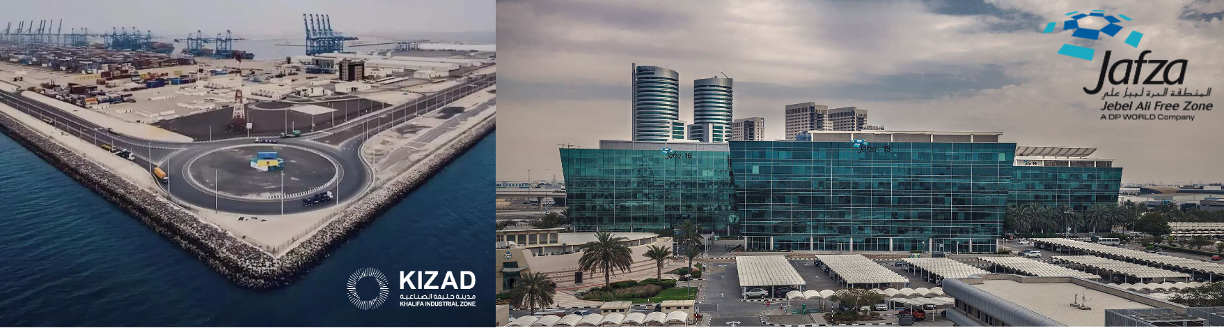
The infrastructure is there. The demand is there. The question is whether your business is positioned to serve it.
The first-mover window is narrowing
Over 750,000 fully foreign-owned entities have registered in the UAE in the past five years. The market is not undiscovered. But within most sectors, the field is still open enough that early movers set the terms. That won’t always be true.
The companies that will look back on 2026 as a turning point are the ones moving now – not the ones who waited for certainty that never quite arrives.
At Howarth International, our role is to compress the timeline. We provide the presence, the relationships and the local knowledge that would otherwise take years to build. We don’t replace the commitment required – but we make it count faster.