Turn on the news today and it’s difficult to escape images of conflict in the Middle East. Military escalation, diplomatic tensions and humanitarian tragedy understandably dominate the headlines. For those directly affected, the consequences are devastating and deserve to be recognised before any discussion of economics or investment.
Yet, as is often the case with this region, the full picture is more complex than the headlines suggest.
For those of us who have spent time working across the Gulf, one thing has become increasingly clear over the years: the Middle East has an extraordinary ability to adapt. It has weathered wars, financial crises, oil price collapses, pandemics and political upheaval, all while continuing to evolve into one of the world’s most ambitious economic regions.
Today’s challenges are real. Shipping routes have been disrupted. Tourism has faced understandable headwinds. Businesses have become more cautious. Boardrooms around the world are reassessing risk.
But beneath that uncertainty, another story is unfolding.
Across the Gulf Cooperation Council (GCC), governments continue to invest at scale, sovereign wealth funds are deploying record levels of capital, infrastructure projects continue to reshape economies and new industries are emerging at remarkable speed.
For businesses willing to look beyond the immediate news cycle, this is not a region standing still. It is a region continuing to transform.
Global Trade Has Been Forced to Adapt
The Middle East sits at the centre of global commerce.
Whether it is the Strait of Hormuz, the Red Sea or the Suez Canal, few regions have a greater influence on international trade. When instability affects these routes, the impact is felt far beyond the region itself.
Over the past year, businesses have experienced higher freight costs, increased marine insurance premiums, longer shipping times and greater pressure to diversify supply chains.
These are not theoretical challenges. They affect pricing, inventory management, procurement and profitability across almost every sector.
Yet an interesting consequence has emerged.
Rather than reducing the Gulf’s strategic importance, recent disruptions have reinforced it.
Companies are placing even greater value on resilient logistics networks, modern ports, advanced airports and efficient customs systems. The UAE, in particular, has spent decades building exactly that infrastructure, while Saudi Arabia continues investing heavily in logistics as part of its ambition to become a global trade and transport hub.
In many respects, the current environment has highlighted why these investments were made in the first place.
Tourism Has Slowed, But Confidence Is Returning
Tourism is often one of the first sectors to react to geopolitical uncertainty.
When travellers see headlines about conflict, many postpone trips—even when their destination is hundreds or thousands of kilometres from the affected areas.
That caution is understandable.
What is perhaps less widely recognised is how proactively governments and airlines are responding.
The UAE continues to position itself as one of the world’s safest and most connected international destinations, while Saudi Arabia remains committed to opening the Kingdom to global tourism on a scale that would have seemed unimaginable just a decade ago.
Rather than waiting for confidence to recover naturally, the region is actively working to rebuild it.
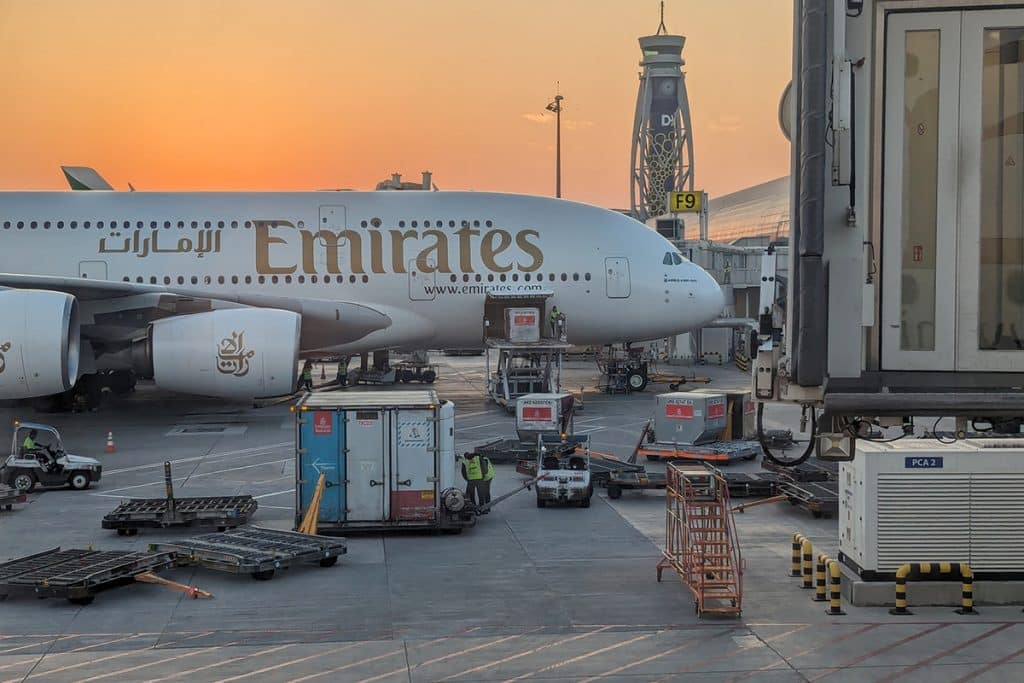
One example is Emirates Airline’s enhanced travel protection programme, which includes conflict-related benefits for eligible bookings alongside medical assistance, trip disruption support and other protections that go beyond what many travellers expect from a conventional airline ticket. It is a practical demonstration of how seriously passenger confidence is being taken.
It is also symbolic of a broader approach. The Gulf has never been content simply to react to events. More often than not, it responds by investing in solutions.
Saudi Arabia Is Entering a New Phase
Much has been written recently about Saudi Arabia.
Stories of delayed projects, revised timelines and changes to some of the Kingdom’s ambitious development plans have led some commentators to question whether Vision 2030 is losing momentum.
That interpretation misses an important point.
The scale of Saudi Arabia’s transformation programme has always been unprecedented. It was inevitable that, as projects moved from concept to delivery, priorities would evolve.
Several giga-projects have been rescoped or phased differently. Some contracts have ended earlier than anticipated, with compensation paid in accordance with contractual arrangements. For the businesses affected, these decisions are significant and sometimes difficult.
However, experienced investors will recognise this as a characteristic of every major transformation programme.
Large portfolios change. Budgets are refined. Capital is redirected towards projects that deliver the greatest strategic value. As programmes mature, governance typically becomes more rigorous and investment decisions more disciplined.
That appears to be where Saudi Arabia is today.
The ambition remains.
The direction remains.
What is changing is the emphasis on execution, prioritisation and long-term value creation.
Businesses operating in the Kingdom increasingly report more detailed procurement processes, greater scrutiny of commercial outcomes and stronger focus on projects that align directly with national priorities.
Far from signalling retreat, this may represent the natural evolution of one of the world’s largest economic transformation programmes.
The UAE Continues to Build for the Future
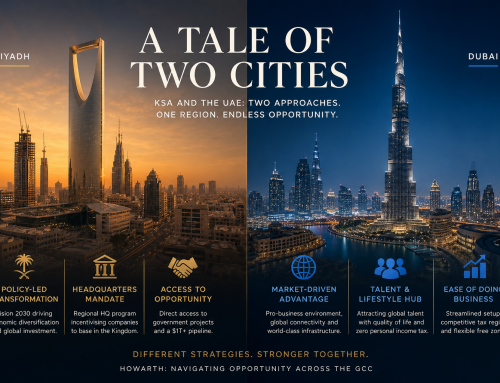
If Saudi Arabia represents bold transformation, the UAE continues to demonstrate remarkable consistency.
Successive governments have spent decades creating an environment that attracts international business through pragmatic regulation, world-class infrastructure and a willingness to embrace innovation.
Today, investment continues across artificial intelligence, financial services, healthcare, logistics, renewable energy, advanced manufacturing and digital infrastructure.
Free zones continue to attract international companies, while Dubai and Abu Dhabi remain among the region’s preferred locations for multinational headquarters and regional operations.
The strategy has been consistent for years: diversify the economy, attract talent, encourage private investment and create an ecosystem where global businesses can grow.
Current events have done little to alter that long-term direction.
Sovereign Wealth Funds Are Quietly Driving the Next Chapter
One of the strongest indicators of confidence is not found in government announcements but in the actions of the region’s sovereign wealth funds.
While investors elsewhere have become increasingly cautious amid geopolitical uncertainty and volatile markets, GCC sovereign wealth funds continue to deploy capital on a remarkable scale.
Institutions such as the Abu Dhabi Investment Authority (ADIA), Mubadala, ADQ and Saudi Arabia’s Public Investment Fund (PIF) have become some of the world’s most influential long-term investors.
Collectively, they manage trillions of dollars in assets and continue investing across artificial intelligence, semiconductors, energy transition, infrastructure, healthcare, advanced manufacturing and technology.
Their role extends well beyond financial returns.
They are helping fund airports, logistics corridors, industrial zones, research centres, tourism destinations and smart cities that will shape the Gulf economy for decades to come.
Perhaps most importantly, they provide continuity.
While markets often focus on quarterly results, sovereign wealth funds invest with a horizon measured in generations. That long-term perspective provides stability at a time when much of the world remains focused on short-term uncertainty.
Opportunity Doesn’t Exist Without Risk
None of this suggests businesses should ignore today’s geopolitical environment.
Quite the opposite.
Responsible organisations should continue to assess political developments, review travel policies, strengthen supply chains, evaluate insurance arrangements and understand local market dynamics before making investment decisions.
The risks are real.
Ignoring them would be irresponsible.
Equally, allowing headlines alone to define strategic decision-making can result in missed opportunities.
History consistently shows that some of the strongest commercial relationships are built during periods when others are waiting on the sidelines.
When competition pauses, conversations become easier. Decision-makers have more time. Partnerships are formed before markets become crowded again.
The organisations that succeed are rarely those that wait for perfect certainty.
They are usually the ones that understand risk, prepare accordingly and commit for the long term.
Looking Beyond Today’s Headlines
The Middle East is rarely simple.
It is a region of extraordinary ambition, rapid change and, at times, significant geopolitical complexity.
Today’s conflict will understandably shape perceptions for some time to come, and the humanitarian consequences should never be overlooked.
Yet alongside those realities sits another truth.
Across the UAE and Saudi Arabia, governments continue investing in the future. Infrastructure is still being built. New industries continue to emerge. Sovereign wealth funds remain among the world’s most active investors. Businesses continue to establish regional headquarters. Airlines continue connecting the world. Tourism continues to recover.
This is not a region waiting for stability before it plans for tomorrow.
It is planning for tomorrow while managing the realities of today.
For international businesses, that distinction matters.
Those prepared to engage with the region thoughtfully, to understand its complexities rather than be defined by its headlines, may find themselves entering one of the world’s most dynamic markets at a particularly significant moment in its evolution.
The Middle East’s next chapter is already underway.
The question is not whether it will be written.
It is who will choose to be part of it.